
Care guide
Terrarium Plant Care
Humidity, moisture, pruning and maintaining a balanced miniature ecosystem.
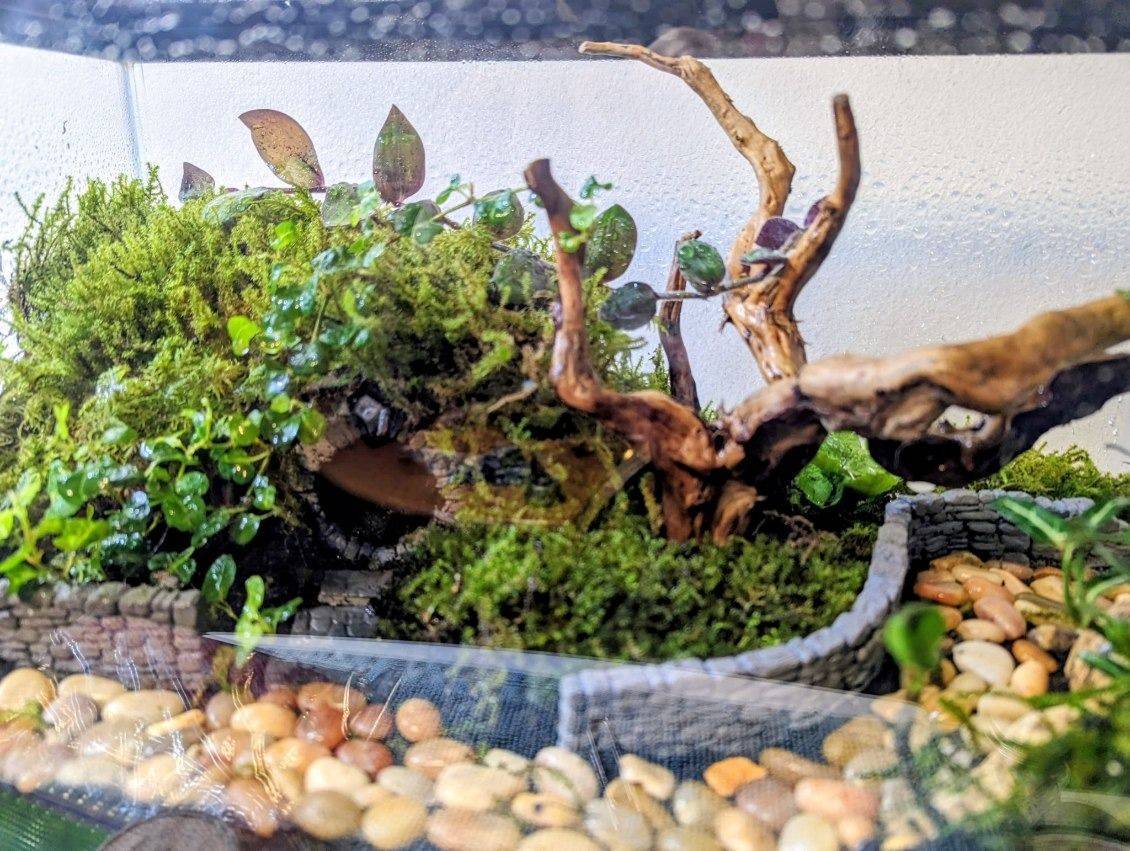
A closed terrarium recycles its own water: moisture evaporates, condenses on the glass and returns to the substrate. Once it settles, it needs very little from you.
Most of the work is at the start — getting moisture and light right — and then occasional pruning to stop one fast grower taking over.
Moisture and reading the glass
The glass tells you what's happening inside. A light mist that clears during the day is about right. Heavy condensation that never clears means it is too wet — open the lid for a few hours. Glass that stays completely dry means it is too dry; add a little water.
Water sparingly. It is far easier to add water than to remove it, and a closed terrarium loses almost none.
Light
Bright, indirect light. Never direct sun through the glass — a sealed container in a sunbeam becomes an oven within minutes and can cook everything inside. Low-wattage full-spectrum LEDs on a timer give reliable results, especially through winter.
Substrate layers
A typical build runs a drainage layer at the bottom, a mesh or barrier over it, then a moisture-retaining substrate suited to tropical plants. Activated charcoal mixed in helps keep things fresh. Depth matters more than most people expect: shallow substrate dries unevenly and limits what will root.
Pruning and maintenance
Trim back anything pressing against the glass or shading its neighbours, and remove dead or yellowing leaves promptly so they don't break down inside the enclosure. Skip fertiliser almost entirely — in a closed system it drives growth you will only have to cut back, and it can encourage algae.
Troubleshooting
- White fuzzy mould early on: common in new builds. Ventilate, remove affected material, and it usually settles as the system balances. Springtails are the standard biological clean-up crew.
- Persistent heavy condensation: too wet. Leave the lid off until it evens out.
- Leggy, stretching plants: not enough light.
- Yellowing lower leaves: often waterlogged substrate rather than a light problem.
- Algae on the glass: too much light, too much nutrient, or both.