
Care guide
Orchid Care
Understanding light, watering, humidity and blooming.
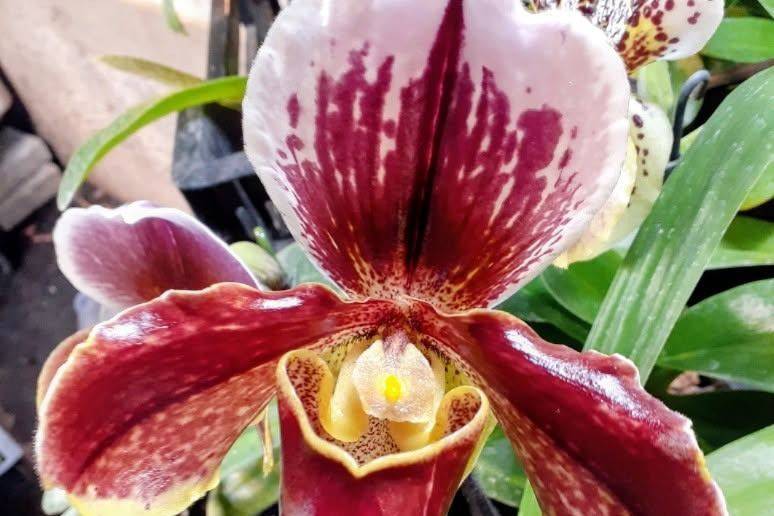
Most tropical orchids are epiphytes: in the wild they grow clinging to trees, with their roots exposed to air, rain and fast drainage.
Everything about caring for them follows from that. They are potted in bark and moss rather than compost, watered thoroughly and then allowed to approach dryness, and they resent sitting wet.
Light
Bright, indirect light is the general rule, though needs vary widely between groups. Leaf colour is a useful gauge: a healthy orchid leaf is usually a light or medium green. Very dark green leaves often mean too little light, and yellowish or reddish leaves can mean too much.
Watering
Water thoroughly, letting water run right through the pot, then let the medium dry out substantially before watering again. Weekly is a common starting rhythm indoors, but check rather than schedule: lift the pot, feel the bark, or look at the roots. Plump green roots are hydrated; silvery-white roots are ready for water.
Empty any decorative outer pot after watering. Standing water is the fastest route to root rot.
Humidity and airflow
Most tropical orchids are happiest between roughly 50% and 70% relative humidity — higher than a typical heated room in winter. A humidity tray, a nearby humidifier or grouping plants together all help. As with airplants, humidity should come with gentle air movement rather than stagnant, damp air.
Potting media and repotting
Bark mixes, sphagnum moss and similar open media give roots the air they need. These break down over time and start holding too much water, so repotting every year or two — usually after flowering — keeps roots healthy. Use a pot only slightly larger than the root mass.
Getting a rebloom
Reblooming usually comes down to enough light, consistent care through the growing season, and, for many types, a drop in night temperature for several weeks. Feed lightly during active growth — a dilute, balanced orchid fertiliser applied regularly beats an occasional strong dose.
Common mistakes
- Watering on a fixed schedule regardless of how wet the medium is.
- Leaving the plant standing in water inside a cachepot.
- Potting in ordinary compost, which suffocates the roots.
- Cutting healthy green roots that are growing outside the pot — those are normal.
- Repotting into a pot several sizes too large.