
Care guide
Airplant Care
Watering, light, airflow and common Tillandsia mistakes.
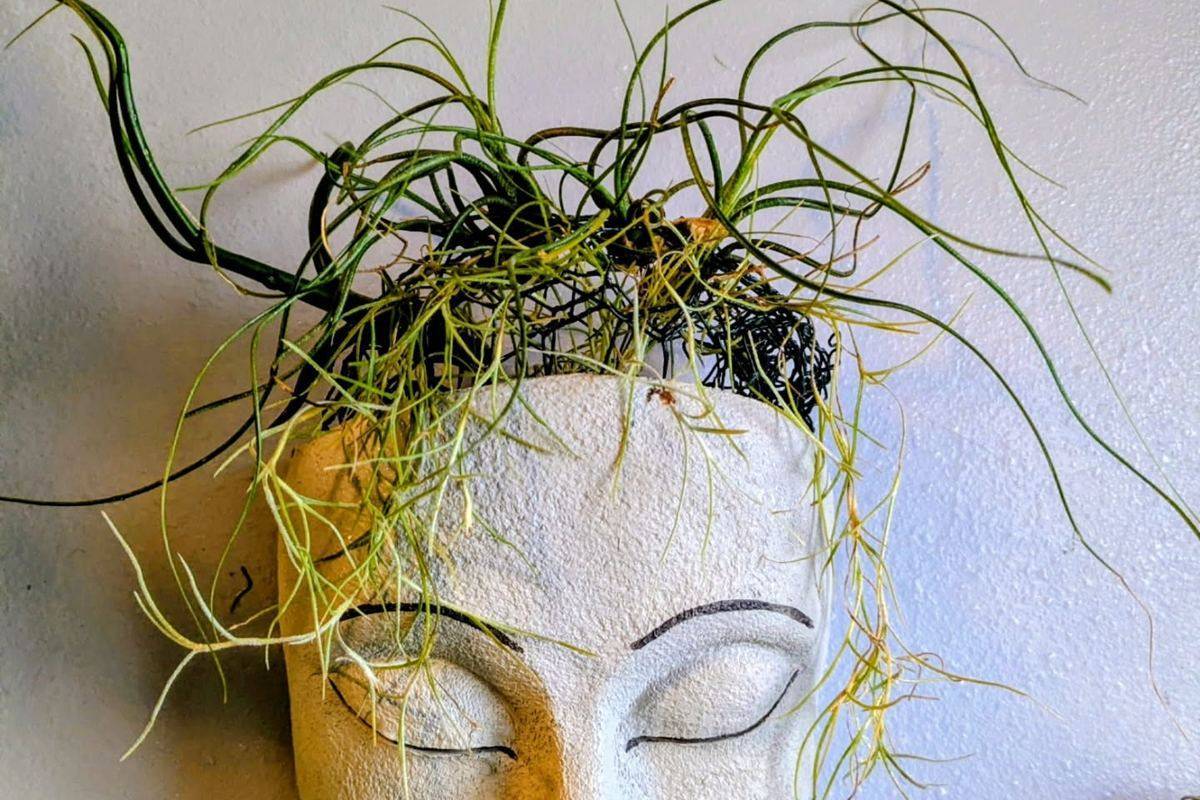
Tillandsias take up water and nutrients through their leaves rather than their roots. Their roots are anchors, not straws — which is why they grow mounted on wood or bark instead of potted in soil.
Almost every airplant problem traces back to one of two things: not enough water, or water that never dried.
Watering
Soaking is the most reliable method: submerge the plant in room-temperature water for 20 to 30 minutes, then shake it out well. Misting alone rarely wets a plant thoroughly enough to keep it hydrated, though it helps between soaks in dry rooms.
How often depends entirely on your air. A plant in a dry, heated room may want a soak once or twice a week; the same plant in a humid bathroom or a planted enclosure may need far less. Let the plant tell you: leaves that curl inward, roll at the edges or feel soft are asking for water.
Rainwater, well water or aquarium water suit Tillandsias better than heavily softened water. Softened water carries salts that build up on the leaves over time.
Drying and airflow
After watering, turn the plant upside down and shake it so water doesn't sit in the centre of the leaves. Then let it dry somewhere with moving air — within about four hours is a good target. Water trapped in the crown for days is the usual cause of rot, which shows up as a collapsing centre and leaves that pull out easily.
Airplants sealed inside a closed container with no air movement are being set up to fail. They want humidity and circulation.
Light
Bright, indirect light suits most Tillandsias — near a window, but out of hot direct sun through glass. As a rough guide, the silvery, fuzzy-looking species tolerate brighter, drier conditions, while greener, smoother species prefer shadier, more humid spots.
Under artificial light, full-spectrum LEDs work well. Plants that stretch and lose their compact shape are usually asking for more light.
Mounting and display
Mount airplants on cork bark, driftwood or stone using fishing line, wire or a plant-safe adhesive. Avoid copper wire, which is toxic to them, and avoid burying the base in moss that stays wet.
Common mistakes
- Misting instead of soaking, and slowly dehydrating the plant.
- Leaving water in the crown after watering.
- Sealing plants in a closed jar with no airflow.
- Sitting the base in wet moss or standing water.
- Using softened water, which leaves salt deposits on the leaves.